

What Architects Should Know About Diffusers, Grilles, and Registers
Air devices may be small components in a mechanical system, but they have a major visual impact on a finished space. Because they are visible to occupants and integrated directly into ceilings and walls, air devices require close coordination between mechanical engineers and architects throughout design.
Understanding the basics of air device types, layout strategies, and coordination requirements can help avoid late-stage conflicts and improve both aesthetics and occupant comfort.
What Are Air Devices?
Air devices are the visible components at the end of an HVAC air distribution system. They deliver conditioned air into a space or return air back to the mechanical system.
The three most common air device categories are:
- Diffusers — used for supply air distribution
- Grilles — used for supply, return, or exhaust applications
- Registers — grilles with integrated dampers for occupant-adjustable airflow
Air devices are selected based on both performance and appearance, including:
- Airflow capacity
- Noise level
- Air throw pattern
- Integration with ceiling systems
- Architectural aesthetics
Common Air Device Types
2×2 Ceiling Diffusers and Return Grilles
The most common air devices in commercial buildings are 2×2 lay-in ceiling devices designed to align with standard acoustic ceiling tile grids.
Supply Diffusers
Typical 2×2 supply diffuser styles include:
- Plaque face
- Cone type
- Louvered face
- Perforated face
These are selected based on airflow performance and desired appearance.
Return Grilles
Perforated 2×2 return grilles are commonly used in ceiling plenum return systems because they provide a clean, uniform appearance that integrates well with acoustic ceiling systems. In applications where privacy or acoustics are important, return air canopies or acoustic shields may be added above the grille to reduce sound transfer between rooms and limit visibility into the ceiling plenum.
Mechanical engineers size air device inlets based on required airflow and performance criteria.
Linear Diffusers
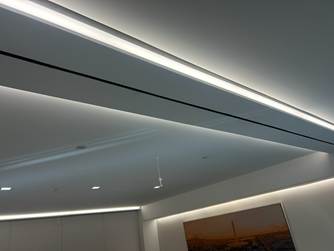
Linear diffusers have become increasingly popular in commercial interiors due to their clean appearance and ability to integrate with modern ceiling designs. They are often coordinated alongside linear lighting systems and are often used near perimeter glazing to improve thermal comfort and create a more uniform architectural aesthetic.
Linear diffusers can also help “wash” perimeter glazing with conditioned air, improving thermal comfort near windows. Early coordination is important because several design variables affect both performance and appearance:
- Slot quantity
- Slot width
- Diffuser length
- Border type
- Plenum box size
Architects should pay particular attention to plenum depth requirements. Some ceiling spaces may not accommodate standard factory plenums, requiring alternate solutions or custom fabrication. For supply applications, plenum boxes should be insulated to prevent condensation.
Common Border Types
Exposed Border
- Typically used with lay-in ceilings
- Visible frame edge
Concealed Border
- Common in drywall applications
- Allows plaster finish to extend to diffuser opening for a cleaner appearance
Grilles and Registers
Grilles and registers consist of rectangular frames with fixed or adjustable louvers that direct airflow.
Registers
Registers include integral dampers that allow occupants to adjust airflow volume. They are commonly used in:
- Residential spaces
- Dwelling units
- Hospitality applications
Grilles
Grilles are more common in commercial buildings and are frequently used for:
- Return air
- Sidewall supply
- Restroom exhaust
- Back-of-house areas
- Exposed duct applications
In many commercial applications, grilles paired with dampers located upstream in ductwork provide better acoustic performance than integral register dampers.
Mechanical engineers specify grille dimensions, blade spacing, and louver angles based on airflow requirements and desired air patterns.
Material Selection
Steel is the standard material for most applications, but aluminum is recommended in high-humidity environments to reduce corrosion risk.
Best Practices for Air Device Layout
Air devices are positioned to maintain occupant comfort and support proper air distribution throughout the space.
Mechanical engineers design layouts to meet ASHRAE 55 thermal comfort requirements, balancing:
- Space temperature
- Air velocity
- Air distribution
- Draft prevention
Understanding Throw and Drop
Two important airflow concepts affect diffuser placement:
Throw
Throw is the horizontal distance air travels from the diffuser before slowing to a specified terminal velocity.
Drop
Drop is the vertical distance the air stream falls below the ceiling plane before reaching terminal velocity.
Poor diffuser placement can create drafts when airflow collides with:
- Walls
- Bulkheads
- Adjacent air streams
- Lighting or ceiling elements
Design Factors That Influence Air Device Placement
Several architectural and environmental conditions impact diffuser layout and performance:
- Occupant locations
- Window and door placement
- Ceiling height
- Obstructions that disrupt airflow
- Lighting fixtures
- Sprinkler heads
- Speakers and ceiling devices
- Thermostat locations
Supply air should never discharge directly toward a thermostat, as it can create inaccurate temperature readings and occupant discomfort.
For taller spaces:
- Consider displacement ventilation when ceilings exceed 18 feet
- Consider multiple supply elevations in multi-story open spaces
Return Air Coordination
Return air locations are generally less sensitive than supply air locations, but several considerations still apply.
Best Practices for Return Placement
- Maintain adequate separation from supply air to avoid short-circuiting airflow
- Coordinate with acoustical requirements
- Avoid locating returns near noisy equipment or transfer ducts
- Position returns to remove stagnant or contaminated air effectively
Return devices are typically selected to visually match adjacent supply devices for a cohesive ceiling appearance.
Why Early Coordination Matters
Air devices affect more than HVAC performance. They directly impact:
- Reflected ceiling plans
- Lighting coordination
- Ceiling aesthetics
- Occupant comfort
- Acoustics
Early collaboration between architects and mechanical engineers helps avoid redesign during construction documentation and results in cleaner, better-performing spaces.

When air device coordination is addressed early, the result is a ceiling plan that works both technically and architecturally.